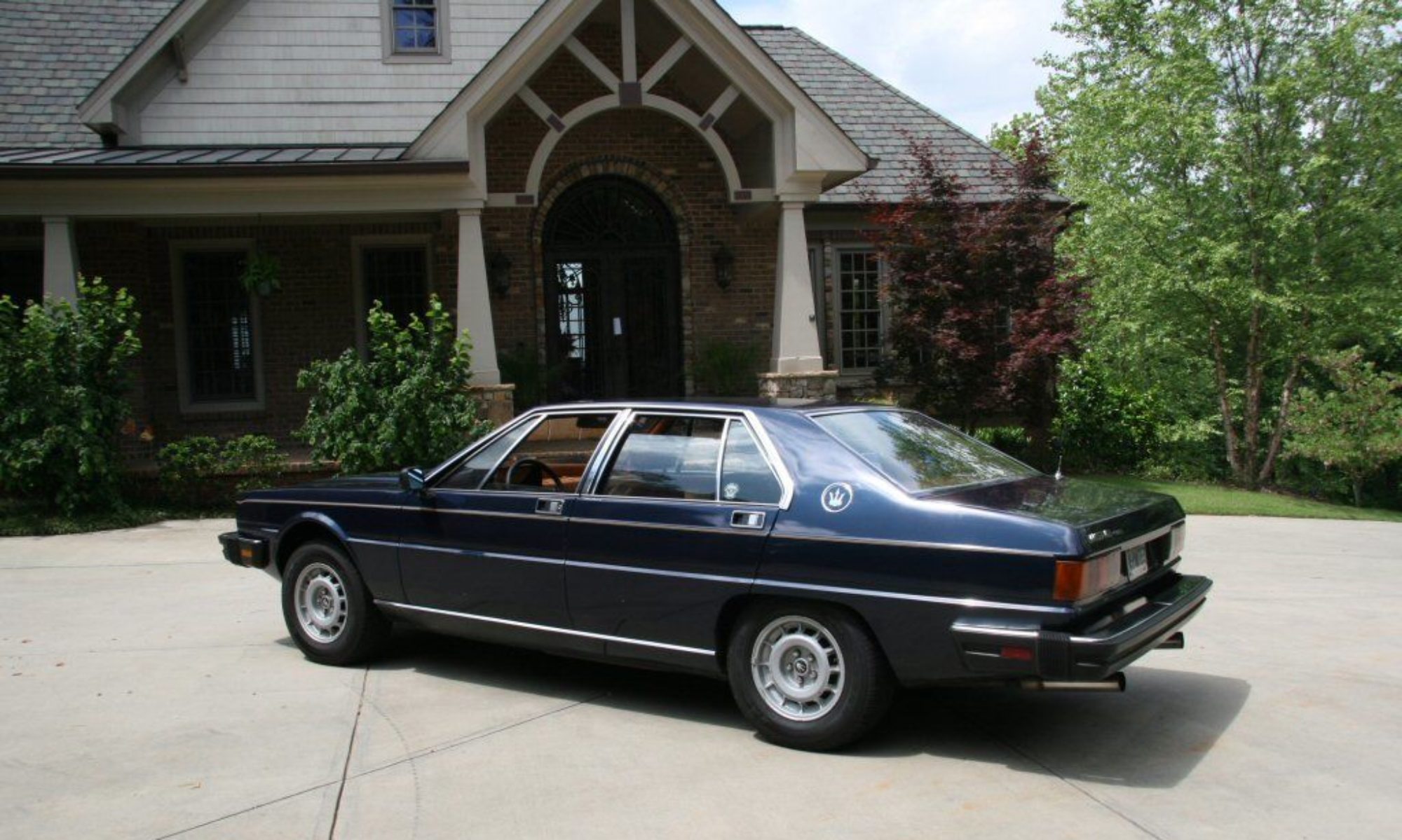
The car arrived when I bought it with an extra starter motor. Foresight?
I had both rebuilt shortly after rebuilding the transmission with original OEM parts. The shop didn’t comment on them when they did the job (in fact initially they couldn’t do the job at all because they didn’t know where to source the parts), and when I picked up the car she fired right up with the characteristic Mopar whine.
Only a day later, while picking up someone at the airport, the starter failed again and left us stranded. So we got a tow back to the shop who swapped starter motors, the original one going into the trunk for later analysis. The shop proceeded to blame the problem on crappy parts, the parts place claims they are US OEM and the best quality available.
That ‘later analysis’ took some time to perform, as since the car started (mostly) fine, there were other things to attend to, so it was put on the back burner until later.
After installing a new cable and still not starting (yes, I did use a booster since the battery was slowly being drained), I figured I could install the starter motor that had only been in the car for a day. Since both are identical and both were rebuilt at the same time with the same parts, it seemed reasonable to assume that it would work better than the one in the car, even if it still gave the occasional hiccup.
I like to try to learn from my mistakes (but by no means manage as often as I’d like), and figured that before jacking up and crawling under the car it would be a good idea to bench test the starter. So we clamped it in a vice and provided it with 12+ volts, shorted the terminals and got “click, click”.
Hmm. Spot a trend here?
Imagine my delight at having figured that out *before* installing it in the car!
It seems about time for that “later analysis”, so the starter went back to the shop for dissection. Two days later the verdict was ready – the solenoid was burned out. After only 1 day of use from new. I guess some things just aren’t made like the used to be.
Examining the options, it seems the Nippon Denso reduction starters are drop-in replacements for the original ones, weigh half as much, offer higher cranking power and require less juice. Sounds like a win-win situation all around.
Looked over the models available and narrowed my choices down to three units.
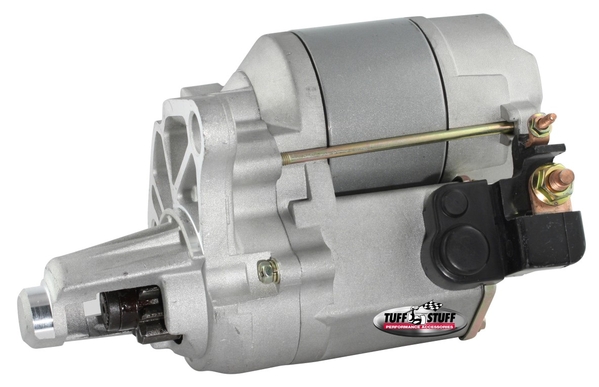
MSD DynaForce (it’s RED!, although on closer inspection looks an awful lot like the Tuff Stuff starter above, and it’s impossible to see once installed anyway)
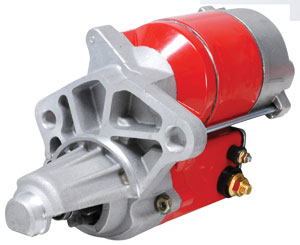
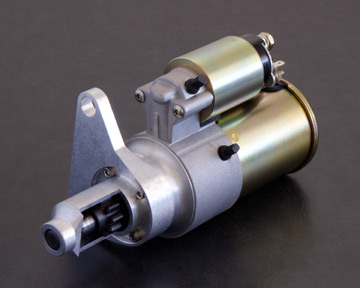
As I wanted to stick to a budget for this restoration, I went with the most affordable option first, thinking I could always get one of the fancy ones later if it doesn’t work. Although I really have to admire RobbMC’s customer service and information along the way, even though I decided not to get their starter. I might get one anyway, they were really so helpful, and their starter seems really to be a cut above the others and offers flexibility in configuration that no one else does.
What a difference between old and new!
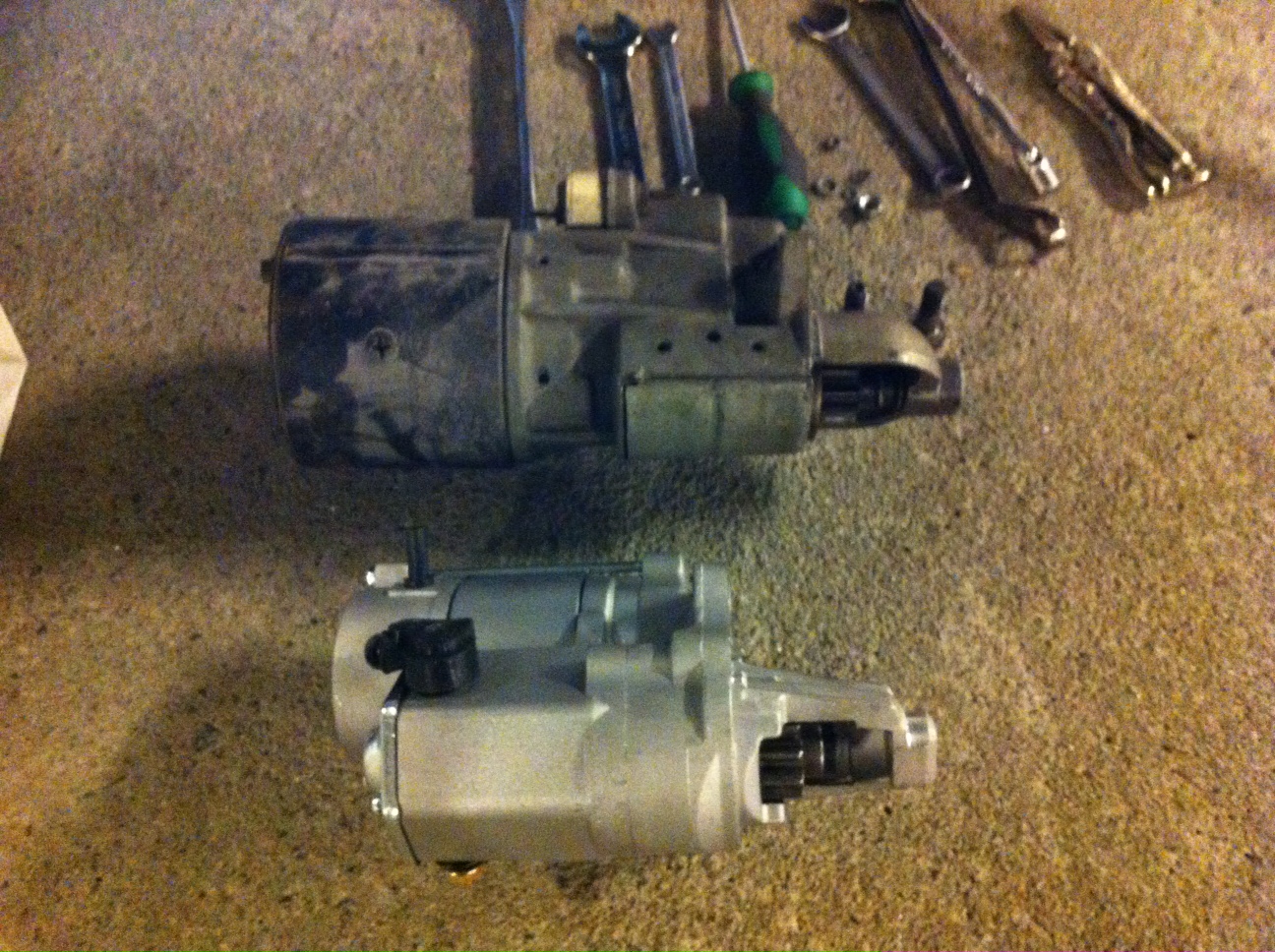
Still wanting to live a little dangerously, I installed it without bench testing it first. All of these after market starters have tried to improve on the original design and make things easier to access by mounting the terminals on the top when mounted in the ‘normal’ Mopar position. Since mine goes on the other side of the engine, the terminals are on the bottom, facing the pavement. Not a big deal, but not what I’d prefer.
It’s amazing how tiny and light it is in comparison with the original.
Anyway, I bolted it up, connected all the wiring and plunked myself down behind the wheel.
Turned key…..
“Clackety clickity k-k-k-k-k-k”
Sounds a lot like a ratcheting noise.
Tried again and the engine turned over!
But very slowly. Too slowly to be of any use.
Doh. Battery is dead. Too many tries previously, even the booster can’t provide enough juice to help.
So I’m off to buy a battery charger.
Stay tuned.